Khaborwala Online Desk
Published: 05 Feb 2026, 09:43 am
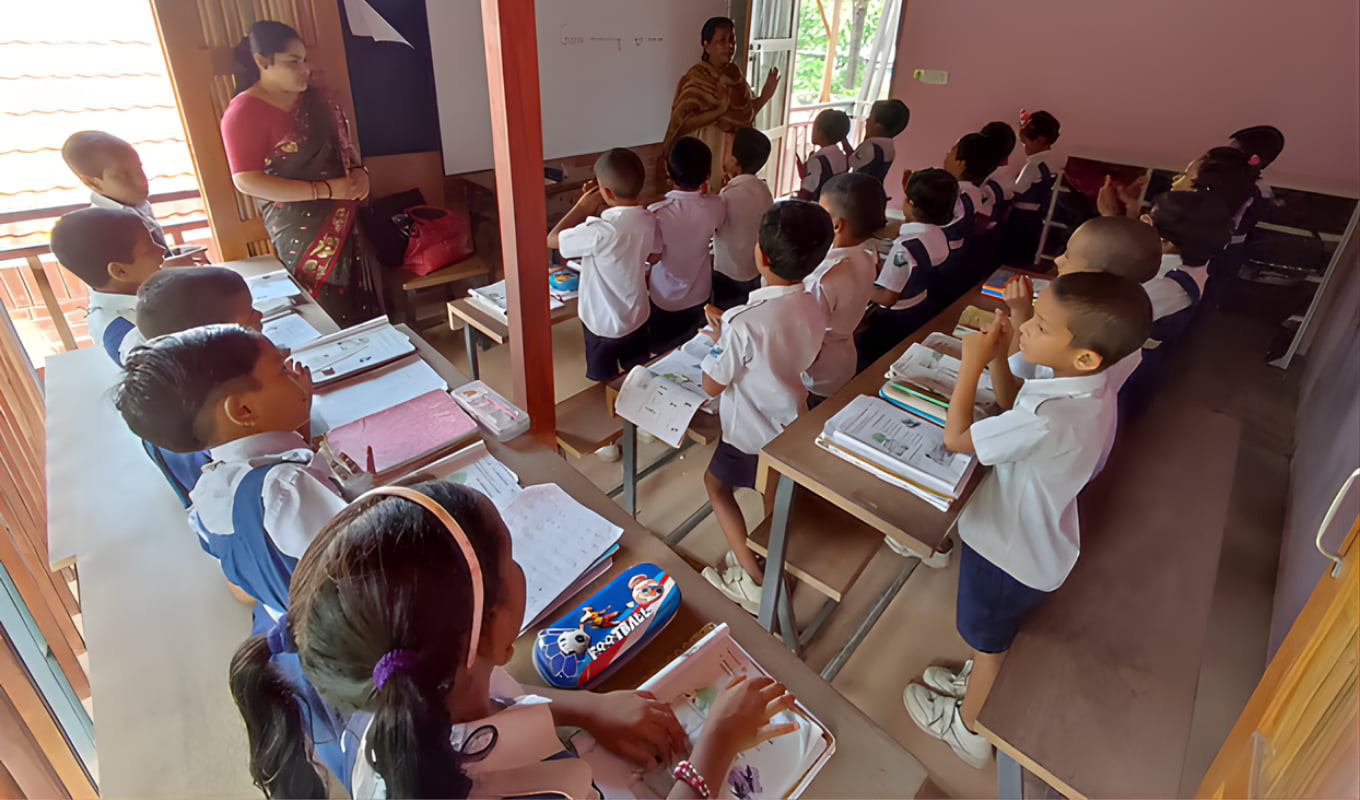
The government has decided to reintroduce written examinations in Classes One and Two of government primary schools, marking a significant shift in the country’s primary education assessment policy. The move partially reverses the fully continuous, exam-free evaluation system introduced only two years ago under the revised national curriculum. From the current academic cycle, young learners will once again face structured summative assessments alongside ongoing classroom-based evaluation, a decision that has already triggered debate among educationists, teachers, and parents.
When the new curriculum was rolled out in 2023, written examinations for the first two grades were abolished. The rationale at the time was to reduce academic pressure on young children and promote play-based, activity-oriented learning that supports cognitive and emotional development. Continuous assessment, based on observation, participation, and classwork, was considered more appropriate for six- and seven-year-olds. However, the authorities have now concluded that the absence of formal testing has created gaps in measuring learning outcomes, prompting a return to a blended assessment model.
According to officials at the Ministry of Primary and Mass Education, a revised assessment guideline for implementation in the 2026 academic year was approved at a meeting held on 26 January. Subsequently, on 1 February, formal instructions were issued to the Directorate of Primary Education and the National Curriculum and Textbook Board to take necessary steps. Additional Secretary (Schools) Shahana Sarmin has confirmed the policy shift.
Under the new framework, subjects that have prescribed textbooks and teacher guides in Classes One and Two will be assessed through a dual approach: 50 per cent continuous assessment and 50 per cent summative (written) assessment. Subjects taught only through teacher guidelines—such as art, physical education, and co-curricular activities—will continue to be evaluated entirely through continuous methods. In practice, core subjects like Bangla, English, and Mathematics will again include written examinations, while creative and experiential subjects will rely on observation-based assessment.
For Classes Three to Five, the system becomes even more examination-oriented. In textbook-based subjects, 70 per cent of the total assessment will come from summative tests, with the remaining 30 per cent based on continuous evaluation. Co-curricular subjects will remain fully under continuous assessment.
A comparison of the revised assessment structure is outlined below:
| Class Level | Subject Type | Continuous Assessment | Summative Assessment |
|---|---|---|---|
| Classes I–II | Textbook-based | 50% | 50% |
| Classes I–II | Co-curricular | 100% | None |
| Classes III–V | Textbook-based | 30% | 70% |
| Classes III–V | Co-curricular | 100% | None |
In government primary schools, summative assessments are conducted three times a year—in April, August, and December. Schools will prepare their own question papers, although neighbouring schools may collaborate if necessary. At least 30 per cent of exam questions must be drawn directly from textbook exercises, aiming to align testing more closely with classroom learning.
Despite official assurances, criticism persists. Muhammad Mahbub Morshed, a member of the government’s advisory committee on primary and non-formal education and an associate professor at the University of Dhaka’s Institute of Education and Research, argues that formal exams place unnecessary pressure on very young children. He contends that without first ensuring effective classroom instruction and robust continuous assessment, exams risk becoming a superficial solution to deeper systemic weaknesses. The core objective, he says, should be to guarantee learning according to each child’s individual capacity.
With more than 118,000 primary schools and over 20 million students nationwide, stakeholders agree that any change in assessment policy will have far-reaching consequences for teaching practices and learning outcomes across Bangladesh’s vast primary education system.

> RAB Seizes Drugs in Bogura Raids
> Lifelong Sentence for Drug Conviction
> Slogans Signal Bid to Reopen Party Office
> Sia Tops Spotify’s Global Australian Exports 2025
> Legal Challenge Seeks Suspension of July National Certificate
> Fearless Journalism to Be Fostered: Minister Zahir Uddin
> Mesut Özil Arrives in Dhaka for Charity Visit
> Sheikh Rabiul Alam Entrusted with Three Transport Portfolios
> Supreme Court to Rule on Ramadan School Closures
> Former Wife Accuses Imad Wasim of Serious Misdeeds
> Shama Obaid Set for Ministerial Role
> BNP Forms 50-Member Cabinet, Invitations Sent

Three suspected drug traffickers have been arrested in two separate anti-narcotics operations conduc...
In Lalmonirhat, a district court has handed down a life imprisonment sentence to a fugitive in a cas...
Bangladesh Awami League leaders and activists in Habiganj have sparked fresh debate after videos sur...
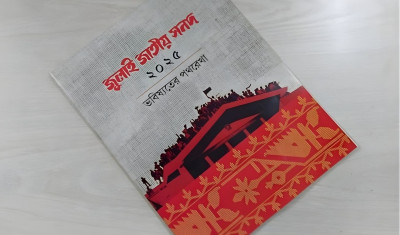
A public interest petition has been filed seeking a suspension of the operation of the July National...
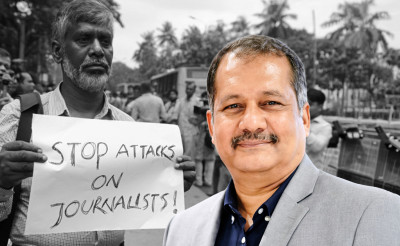
Bangladesh’s newly appointed Minister of Information and Broadcasting, Zahir Uddin Swapon, has pledg...

A head-on collision between a Bangladesh Army three-ton truck and a passenger bus in Mymensingh has...

Bangladesh’s Commerce Minister, Khandakar Abdul Muktadir, has reassured citizens that there is no ca...
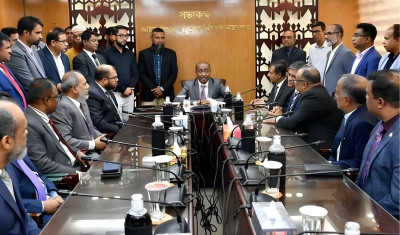
Md. Asaduzzaman, Minister for Law, Justice and Parliamentary Affairs, has issued a stern warning reg...

Newly appointed Minister for Local Government, Mirza Fakhrul Islam Alamgir, has pledged that electio...

Mahdi Hasan, the former coordinator of the anti-discrimination student movement and general secretar...
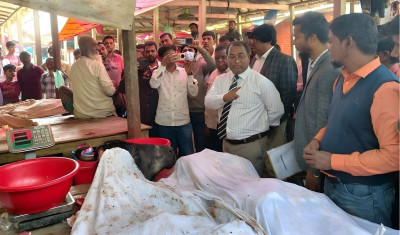
In a proactive move ahead of the holy month of Ramadan, the administration of Kazipur Upazila, Siraj...

In a case that has gripped Dhaka for nearly six years, a court has sentenced a woman and her close a...


Availabe for iphone & ipads

Available in google play
 বাংলা
বাংলা